
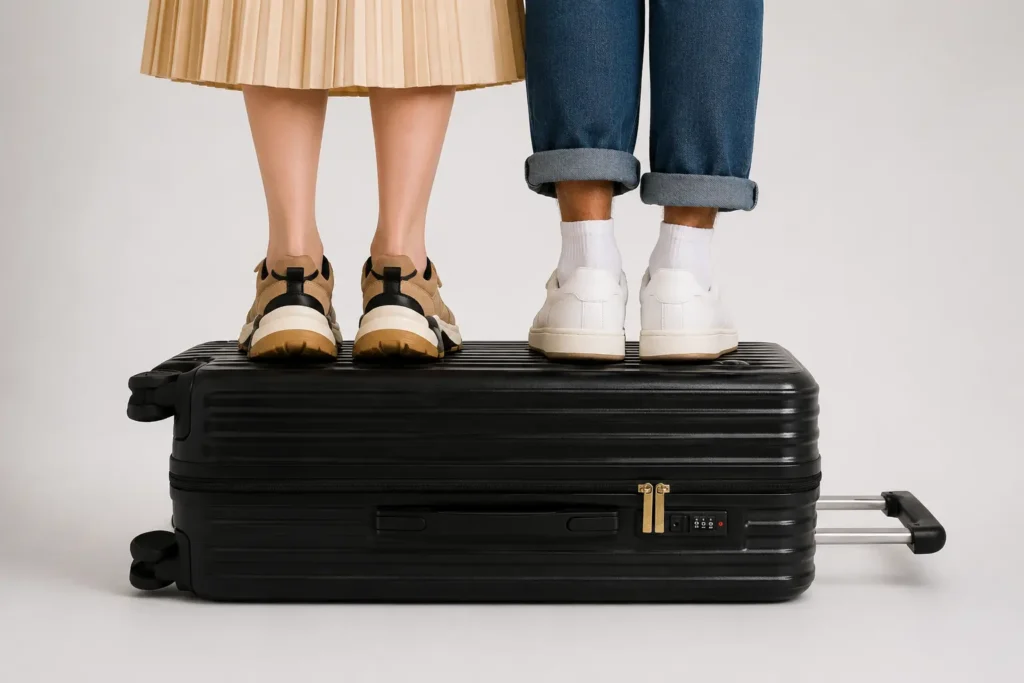
Why Hard-Shell Polycarbonate Luggage Is a Game Changer
If you fly often, you already know the truth about airport baggage handling: suitcases get thrown, stacked, dropped, and dragged across miles of conveyor belts every single day. For frequent flyers, the luggage you choose isn’t just about looks — it’s about survival. That’s exactly why hard-shell polycarbonate luggage has become the go-to choice for people who live out of a suitcase more weeks than not.
Here’s why switching to a polycarbonate hard-shell suitcase changes the way you travel.
It’s Built to Survive Real Airport Abuse
Polycarbonate is the same impact-resistant material used in bulletproof glass and aircraft windows — which tells you a lot about how it holds up under stress. Unlike soft-shell bags that can tear or get crushed under heavier luggage, a hard-shell suitcase made from ABS + polycarbonate flexes on impact and springs back to its shape instead of cracking or denting permanently.
For someone checking bags every week, that resilience isn’t a bonus feature — it’s the difference between a suitcase that lasts one trip and one that lasts years.
Lightweight Without Sacrificing Protection
A common myth is that tougher luggage means heavier luggage. Modern ABS and polycarbonate blends flip that assumption. These materials are engineered to be strong and lightweight, which matters more than almost anything else when airlines enforce strict weight limits. Every extra pound in your empty suitcase is a pound you can’t use for what you’re actually packing.
Frequent flyers who switch from traditional hard-case or canvas luggage to a polycarbonate shell often find they can pack more — without tipping the scale at check-in.
Weatherproof and Low-Maintenance
Rain on the tarmac, spilled coffee at the gate, humidity in tropical destinations — a hard polycarbonate shell doesn’t absorb moisture the way fabric luggage does. Wipe it down and it looks like new. There’s no fabric to stain, fray, or soak through, which matters a lot when your suitcase is out in the elements more often than it’s sitting in a closet.
Better Security for What’s Inside
Soft-shell bags can be sliced open. A rigid polycarbonate shell is far more resistant to tampering, and most hard-shell suitcases pair the shell with a built-in combination lock for an added layer of protection. For business travelers carrying laptops, documents, or anything they can’t afford to lose, that peace of mind is worth the switch on its own.
Keeps Its Shape — and Its Professional Look
A soft duffel sags and wrinkles with use. A polycarbonate hard shell holds its structure trip after trip, which means it still looks sharp rolling into a client meeting on trip fifty as it did on trip one. For anyone whose luggage is visible in professional settings, that consistency matters.
Smoother, Quieter Mobility
Most hard-shell suitcases today pair the polycarbonate shell with 360° spinner wheels, letting the bag glide rather than drag. Combined with a lightweight shell, this drastically reduces the physical toll of navigating long terminals, tight connections, and crowded platforms — something only frequent flyers truly appreciate.
The Bottom Line
For anyone who travels often, luggage isn’t a one-time purchase — it’s gear that needs to perform trip after trip, year after year. Hard-shell polycarbonate luggage delivers the rare combination frequent flyers actually need: high-impact durability, low weight, weather resistance, and a professional look that doesn’t fade with wear. It’s not just an upgrade — for people who live on the road, it’s the smarter default.
polycarbonate resists impact, moisture, and tampering better than fabric bags, though soft-shell luggage can flex into tighter overhead spaces.
Polycarbonate is generally more impact-resistant and flexible than pure ABS, which is why many premium suitcases use an ABS + polycarbonate blend for the best of both — strength and affordability.
Quality polycarbonate shells are scratch-resistant, though not scratch-proof. Textured or matte finishes tend to hide minor wear better than glossy ones.
No — modern polycarbonate blends are engineered to be lightweight, often weighing less than comparable soft-shell or older hard-case luggage.